
Why KOLCO
Training data that can be documented, audited and licensed with confidence
The corpus is designed for organisations that must account for the origin, rights and composition of their training data.
Documented provenance
Every asset is produced by a single studio and licensed through KOLCO COMMERCE PRIVATE LIMITED. The corpus contains no third-party aggregation, no scraped material and no stock-library content.
Human-authored
Every file is composed by people from vector artwork and typographic systems that people built. No machine authored any part of any asset.
Release documentation
Each release is accompanied by a datasheet, per-file metadata, a consent manifest and a QA report, prepared for model-card and compliance review.
Editable at source
Live SVG text, intact structure and deterministic renders, with the vector source available as ground truth for every training objective.
The corpus
Three collections from a single production source
Every collection is a single production line with one metadata schema, which is why per-file metadata is uniform across hundreds of thousands of assets rather than reconciled after the fact.
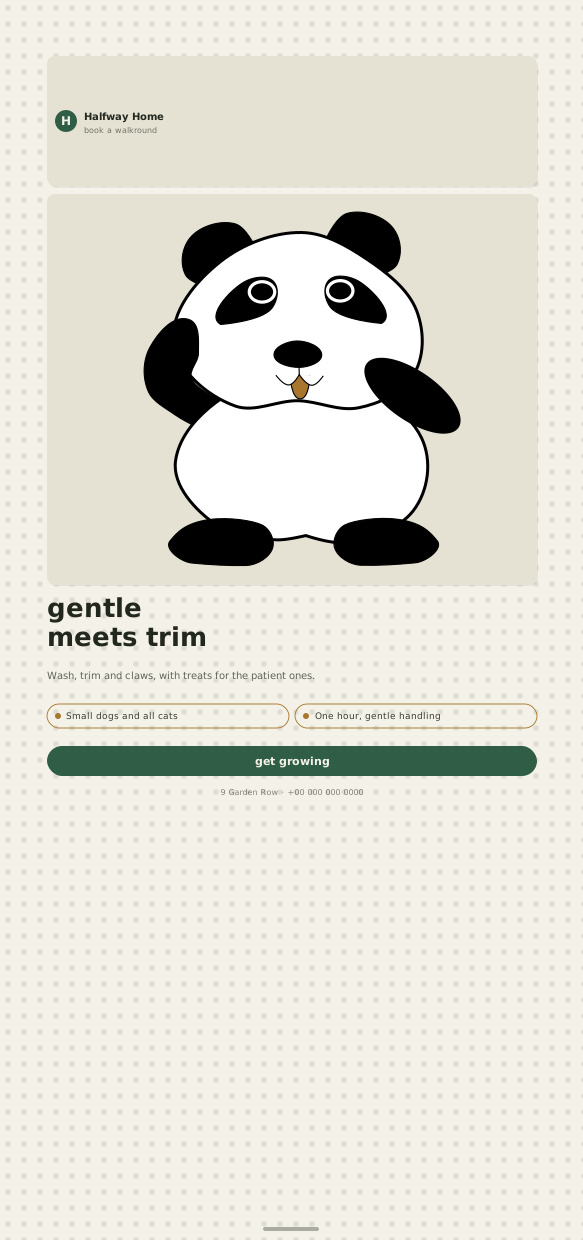
Poster & print
- 205 business verticals, 587 layout families
- 519 palettes, 23 print formats, 56 typographic themes
- Dublin Core RDF embedded in every file
Infographics
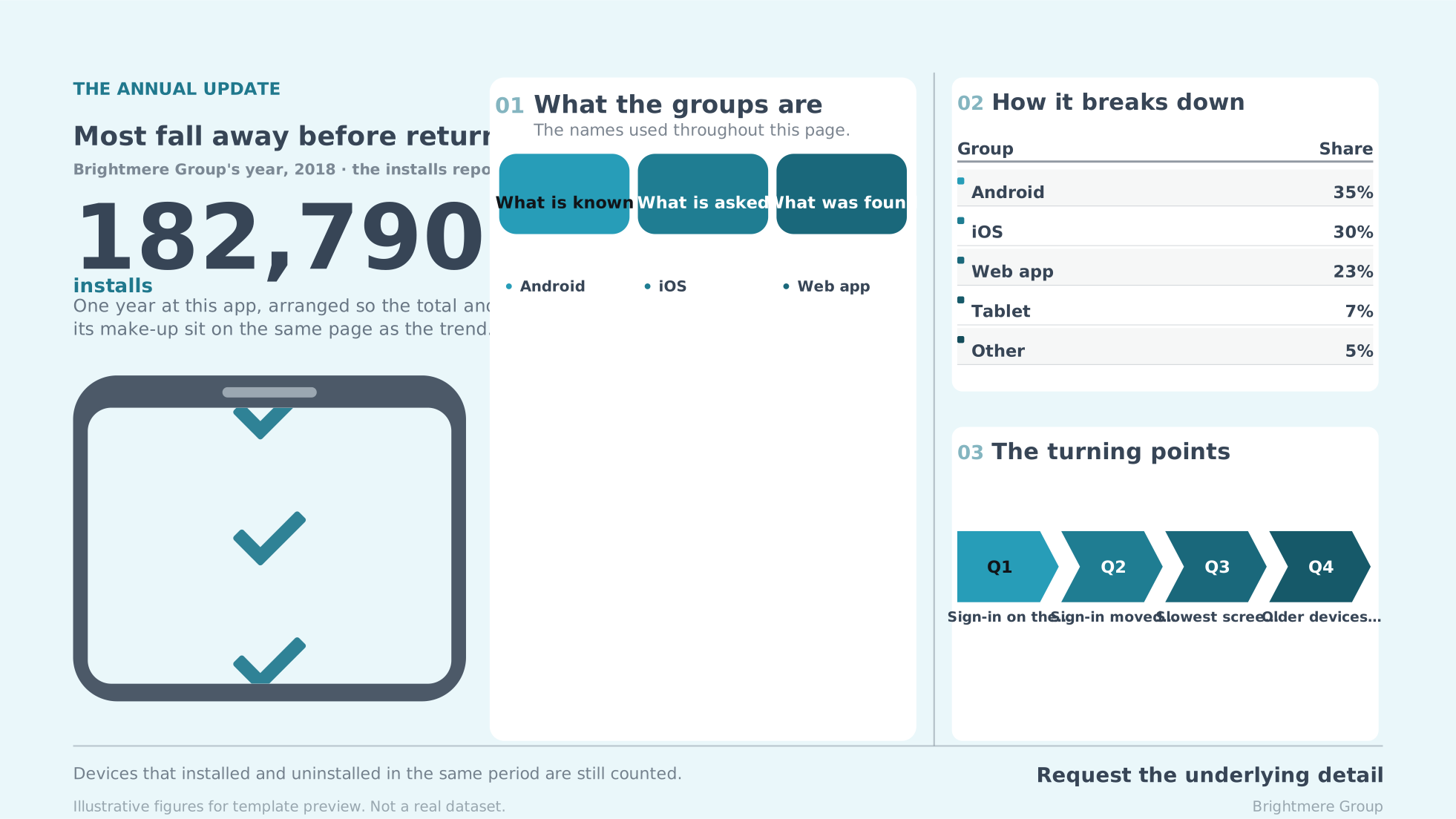
- 56 sectors, 896 subjects, 417 towns and cities
- 16 page formats across 4 production lines
- Figures on each page are internally consistent
Residential floor plans
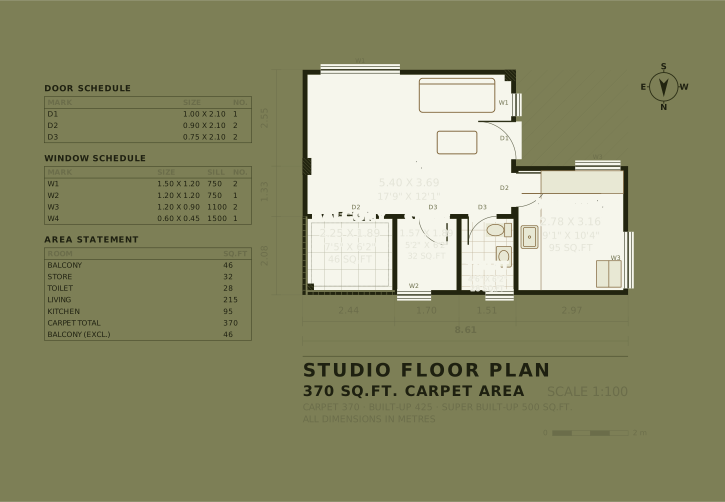
- Studio to 4 BHK, 237 to 2,186 sq ft
- 20 standard CAD layers on every plan
- 21 metadata fields per plan
Sample files
Four files from the public sample, unmodified. Select a file to view it at size.

Training applications
One corpus, organised by training objective
The same assets serve several objectives. The public sample allows each property to be confirmed before an engagement begins.
Vector graphics synthesis
Every asset is a vector source that renders deterministically to raster at any resolution. Each file therefore yields an aligned image-and-SVG pair with clean geometry. Scope: the whole corpus, 3,096,618 pairs.
Text rendering
Each string is a live SVG text node carrying its content, position, size and colour, providing ground truth that scraped image data cannot. Counted in the public sample: 10,866 text elements across 191 files. Across the corpus, scaled by collection: 169,000,000 and above.
Layout understanding
Every text node carries an explicit font size and position, and every page uses more than one size, so typographic hierarchy and reading order are recoverable per file across 23 print formats and 587 layout families. Verified on 92 of 92 posters in the sample.
Chart and document understanding
On each infographic the share breakdown, ranking, trend and comparison are four views of one set of figures. Pages are internally consistent before and after editing. Scope: 1,800,000 infographics across 56 sectors and 896 subjects.
Spatial reasoning
Floor plans are drawn on 20 standard CAD layers, with room labels as a regular quartet of name, metric dimensions, imperial dimensions and area. Plan understanding, conditional layout and raster-to-CAD conversion are described on the floor plans page.
Each property belongs to the SVG source rather than to an annotation layer added afterwards. KOLCO delivers them in the training format specified by the licensee as part of a release.
Verification
Measured on the public sample
Every figure below was obtained by parsing the 191 SVG files in the public sample, which was drawn at random within each format and is unmodified. The sample and method are public so that the results can be reproduced independently.
| Check | Posters | Infographics | Floor plans |
|---|---|---|---|
| Files in sample | 92 | 48 | 51 |
| Parse as valid XML | 92 / 92 | 48 / 48 | 51 / 51 |
| Carry live, non-empty text | 92 / 92 | 48 / 48 | 51 / 51 |
| Reference a remote font or asset | 0 | 0 | 0 |
| Median file size | 88 KB | 76 KB | 41 KB |
| Median live text nodes | 7 | 61 | 151 |
| Median vector paths | 20 | 32 | 275 |
Fonts are embedded as data URIs or referenced as system faces with fallbacks. No file references an external font or image, so assets render identically in an offline pipeline. Class distributions, the label schema and worked examples are provided in the datasheet.
Governance and compliance
Provenance statements and their basis
Each statement is also made in the licence note that accompanies every pack and is documented at the level of the individual file wherever the format permits.
| Statement | Basis |
|---|---|
| Single chain of title | Every asset was produced by The Doodle Desk and is licensed through KOLCO COMMERCE PRIVATE LIMITED. Nothing in the corpus is aggregated from third parties, scraped, or sourced from stock libraries. |
| Human authorship | People composed every file. No machine authored any part of any asset. A model trained on the corpus is therefore not recycling another model’s output. |
| No personal data | No file depicts a real person, organisation, address, building or measurement. Names, figures and locations are illustrative and written by the producer. The corpus contains no photographs. |
| No third-party marks | No real brands or organisations appear. Where a layout includes a logo position, it carries a generic mark drawn by the producer for the licensee to replace. |
| Font licensing | Every typeface is embedded under SIL OFL, Apache 2.0 or the Ubuntu Font Licence, or referenced as a common system face with a generic fallback. No font licence travels with a file. Verified: zero remote font references across the public sample. |
| Documentation | A datasheet, per-file metadata, a consent manifest and a QA report accompany each release. Commercial terms, including warranties, are set out in the licence agreement. |
Engagement model
From public sample to production release
Scoping extends to the sub-collection, so a licence covers the part of the corpus relevant to the objective and no more. The sequence is the same for every organisation.
Public sample
191 files with metadata, catalogue indexes and licence notes. Available without agreement or registration.
Evaluation slice
A larger slice cut to the licensee’s taxonomy with the full record schema, provided under an evaluation agreement. Assessment only; no training grant.
Release licence
A versioned release of one or more collections, licensed for model training on an annual, non-exclusive term, with the documentation a model card requires.
Delivery and updates
Delivered to the licensee’s storage under immutable release tags. Quarterly refreshes ship as new tags; withdrawals are listed explicitly.
Licensing and delivery
Terms, formats and the public sample
| Item | Detail |
|---|---|
| Licence | Annual, non-exclusive training licence per release tag. The agreement is supplied before any commercial discussion. |
| Exclusivity | Not offered on the existing catalogue. First-window exclusivity is available on commissioned sets drawn to the licensee’s taxonomy. |
| Delivery | The licensee’s S3 or GCS bucket, a private Hugging Face repository, or signed archive links. |
| Packaging | WebDataset shards or Parquet; sources and renders addressed by SHA-256. |
| Documentation | Datasheet, consent manifest, QA report and a provenance summary prepared for a model card. |
Public sample
Provided for evaluation only; not licensed for redistribution. Commercial terms accompany the full pack.
About KOLCO
The contracting party and the producer
KOLCO COMMERCE PRIVATE LIMITED
Operates KOLCO CLUB and is the contracting party on every licence. Registered in India. Operational address, terms of service, privacy policy.
The Doodle Desk
Producer of the current corpus and the named creator in every file’s embedded metadata (thedoodledesk.com). KOLCO holds the rights to license the corpus for model training; the producer’s grant is recorded in the consent manifest.
Frequently asked questions
Common questions from evaluation and procurement teams
- Can the data be inspected before a licence is agreed?
- Yes. The 191-file public sample is published for all three collections, drawn at random within each format and unmodified. It includes the per-file metadata index, the catalogue index and the licence note, so the statements on this page can be verified before a contract exists.
- Did a machine author any of the artwork?
- No. People drew and composed every file in the shipping packs, and the licence note that accompanies each pack states this. A design model trained on another model’s output inherits its artefacts, and there is no way to detect that after the fact from the files alone.
- Does the corpus contain personal data?
- No. No file depicts a real person, organisation, address, building or measurement. Names, figures and locations are illustrative content written by the producer. There are no photographs in the corpus; the illustration line is vector artwork.
- Can a single collection or sub-collection be licensed?
- Yes. Scoping extends to the sub-collection: icon sets alone, floor plans alone, or one production line of infographics. A licence is not required to cover the whole catalogue.
- Is exclusivity available?
- Standard release licences are non-exclusive. First-window exclusivity is available on commissioned sets, where a taxonomy, style range and volume are drawn to specification and delivered to the commissioning licensee first. Exclusivity on the existing catalogue is not offered.
- How are releases versioned, and how are withdrawals handled?
- Every release carries an immutable tag. Additions ship quarterly as new tags; a licence covers the tag it was issued against and each refresh in its term. A withdrawn file is listed explicitly in the next tag’s manifest so that a training set can be reconciled without comparing archives.
- What if the required data is not in the catalogue?
- Commissioned sets. Given a taxonomy and coverage targets, work is drawn to brief under the same consent and provenance record as the existing catalogue, with a first-window exclusivity option.
Contact
Request evaluation access
Describe the training objective and the collections of interest. KOLCO responds with the record schema, the licence agreement and an evaluation slice.
What to expect
- The record schema and the licence agreement
- An evaluation slice from the closest collections
- A response from a named member of the team
Direct contact
Requests from a named person at an organisation are handled by a person, not a queue.